Dynamic Lists - ADVOCACY UPDATES
- Advanced Search - STATE REGULATIONS
- Advanced Search - TECH TIPS
- Advanced Search - BLOG POSTS
- Dynamic Lists - WEBINARS
- Dynamic Lists - ADVOCACY UPDATES
- Dynamic Lists - DIGITAL & SCREEN PRINTING
- Dynamic Lists - COMPLIANCE & REGULATIONS
- Dynamic Lists - SGIA PRESS RELEASES
- Dynamic Lists - MEMBER PRESS RELEASES
-
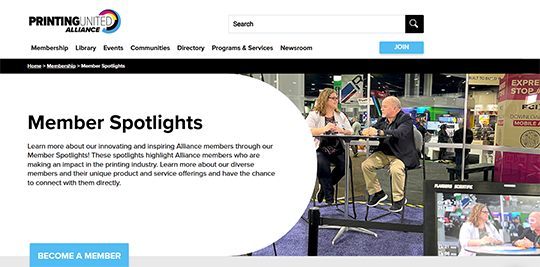 Video 7: Get Inspired by Fellow Members
April 22, 2025
Get inspired by the stories of fellow members! Find out how you can be featured in our Member Spotlight series and help showcase the incredible talent across the Alliance community. -
 Video 8: Recap
April 22, 2025
We’ll tie it all together with a quick recap of everything you’ve learned. Plus, find out where to go for answers, support, and next steps as you continue your journey with the Alliance. -
 Roland DGA Announces Launch of New V-BOND Ink
April 21, 2025
Roland DGA Corporation has announced the launch of new V-BOND UV ink specially formulated for use with Roland DG VersaOBJECT MO Series UV flatbed printers. -
Graphco and Awning Innovations Announce Integration of SD Augusta CNC System with Auto Stud Welding
April 17, 2025
Graphco proudly announces the successful installation of the SD Augusta F150R Pro Hybrid CNC Routing & Cutting System with Auto Stud Welding (ASW) technology at Awning Innovations. -
Ricoh Ranked #1 for Market Share in U.S. and Canada for Continuous Feed Inkjet
April 17, 2025
Ricoh USA, Inc. announced it has secured the #1 market share position for Continuous Feed Inkjet Systems in both the U.S. and Canada in the IDC Quarterly Hardcopy Peripherals Tracker – Calendar 2024.