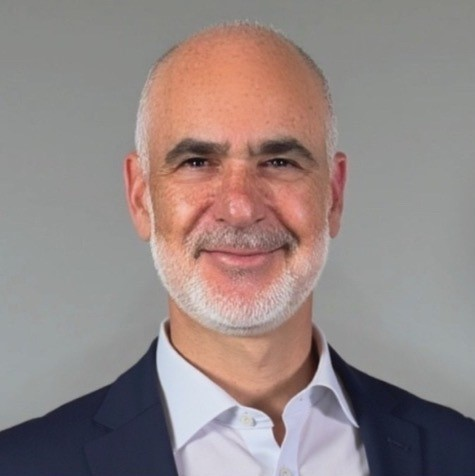
PRINTING United Alliance is grateful to serve its members who make such significant impacts on the printing industry. Through our Member Spotlights, we continue to recognize our members, and help our community get to know their peers better, both professionally and personally. The following is a Q&A and video interview with Greg Schuman, partner and vice president of marketing at World3D Lenticular Printing.
Please provide a brief history of your company and its core mission.
World3D Lenticular Printing was established in 1992 with the express goal of introducing lenticular print technology as a serious marketing tool. Although lenticular printing has existed since the 1940s, it had long been perceived primarily as a novelty. Over the past 33 years, we have worked to shift that perception, elevating animated print from a curiosity into a powerful marketing communication medium.
Today, World3D serves a broad range of clients across advertising, retail, and brand marketing, helping them stand out with eye-catching lenticular imagery that moves, morphs, and actively engages viewers.
Why has World3D built its business around lenticular printing, and which applications or effects are driving the most client interest?
World3D has built its business around lenticular printing because no other medium delivers the same immediate, visceral reaction. People stop, look twice, and engage in a way that flat print simply cannot achieve. We have seen countless print technologies come and go, but lenticular’s ability to capture attention and tell a story — without screens or power sources — keeps it relevant and in demand.
Today, the applications generating the most client interest include retail point-of-purchase displays, large-format display for trade shows and event marketing, and premium packaging where brands want a tactile, memorable unboxing experience. We’re also seeing growing interest in the fine art and collectibles space, where lenticular’s unique visual properties are being embraced by galleries and collectors seeking something genuinely unlike anything else on the wall.
How does lenticular printing influence client engagement compared to more traditional print formats, and are there any new developments or innovations you are excited about?
Lenticular printing drives engagement in ways traditional print formats simply cannot because it introduces interaction into a physical medium. As the viewing angle changes, the image itself changes, prompting viewers to move, tilt, and re-engage with the piece. Handheld prints are naturally rotated back and forth, while large-format installations evolve as people walk past them, encouraging viewers to stop and physically interact with the display. That movement transforms print from a passive experience into an active one.
Numerous studies and client campaigns show that lenticular applications consistently produce longer dwell times and stronger message recall compared to static print. In an environment where audiences are saturated with visual content, motion created without screens or power immediately differentiates the message and captures attention in a tangible, memorable way. Many clients find that lenticular pieces become conversation starters, extending engagement well beyond the initial viewing moment and increasing the overall effectiveness of a campaign.
From a technology standpoint, advances in software workflows, lens manufacturing precision, and large-format press capabilities have significantly improved image fidelity and production scalability. However, the most exciting developments today are creative rather than purely technical. Designers and brands are gaining a deeper understanding of how to build messaging specifically for lenticular, treating motion as an intentional design element rather than a novelty effect.
That evolution has also enabled lenticular printing to move beyond marketing applications and into fine art and collectible formats. Through our MotionWorks Art division, we are collaborating with digital and AI artists to produce limited-edition lenticular works for galleries, collectors, and hospitality environments. This convergence of print technology, digital creativity, and experiential design is expanding the medium’s relevance and introducing lenticular printing to entirely new audiences.
Is there a recent project or campaign that you’re especially proud of? If so, can you elaborate?
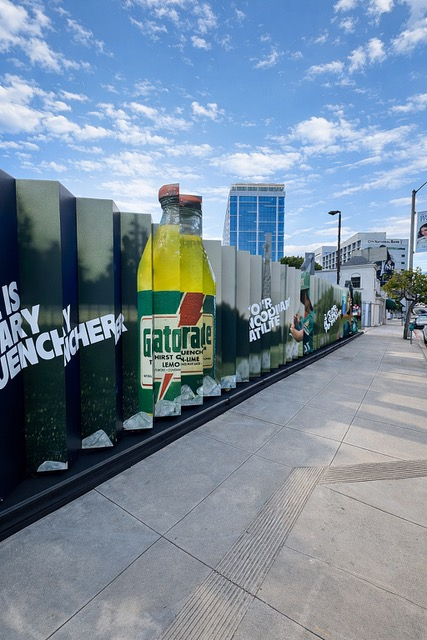
Part of the excitement of working in this medium is seeing the creativity our clients bring to both imagery and application. Recently, we produced a stunning 3D lenticular cover for The Hollywood Reporter, and in that same month completed a 120-foot display on the Sunset Strip for a Gatorade/Netflix co-marketing campaign. The range of scale and application within a single month illustrates what makes this work so dynamic.
What we find most gratifying is the feedback. Clients are consistently delighted, and their audiences are genuinely amazed—so much so that some of our pieces have taken on collectible status. That’s not something that happens with just any print format, and it’s what truly sets lenticular apart. It isn’t just good for business; it’s deeply rewarding for our team as well.
What motivated World3D to become a member of PRINTING United Alliance, and what resources do you plan to or have already utilized through your membership?
Joining PRINTING United Alliance felt like a natural step for a company that has spent more than three decades pushing the boundaries of what print can do. As lenticular printing continues to evolve — in materials, resolution, and application — staying connected to the broader printing industry’s research, trends, and professional community is more valuable than ever
We look forward to leveraging the Alliance’s many resources as we continue to grow. For a specialty printer like World3D, membership provides both industry validation and access to knowledge that helps us better serve our clients. Ultimately, our goal is to keep learning, keep innovating, and continue delivering print solutions that create meaningful engagement.
Is there anything else you’d like to share?
At World3D, we’ve seen firsthand how innovation happens when printers collaborate with designers, marketers, and artists to rethink what print can be. Whether in marketing applications or fine art through our MotionWorks Art division, the goal remains the same: to create work that people don’t just see, but actively engage with and remember.
We believe the printing industry’s strength has always been its ability to adapt, and organizations like PRINTING United Alliance play an important role in fostering collaboration, education, and shared progress as the industry continues to evolve.
For more information on World3D Lenticular Printing, visit their website at https://world3d.com/.
__________________________________________________________________________________________
Greg Schuman, partner and vice president of marketing at World3D Lenticular Printing, discusses the misconceptions surrounding lenticular printing, how the company is utilizing AI to upscale art while partnering with digital AI artists, and the credibility that comes with being a PRINTING United Alliance member.